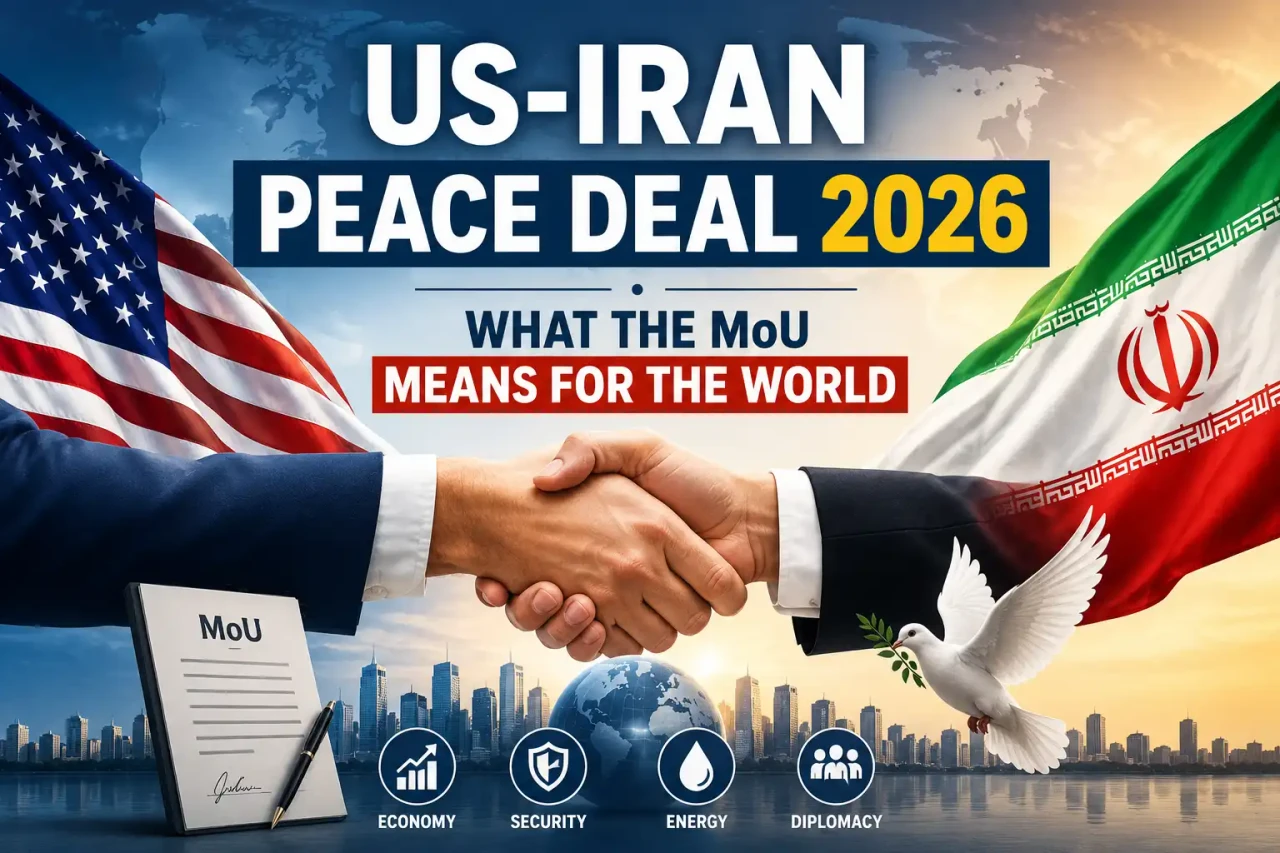
After nearly four months of conflict triggered by US-Israeli strikes on Iran, Washington and Tehran have taken a historic step toward de-escalation. In June 2026, both nations electronically signed a memorandum of understanding (MoU) that lays out a framework for ending hostilities, reopening the Strait of Hormuz, and launching a 60-day window of negotiations on Iran's nuclear programme and sanctions relief. This blog breaks down what is known about the deal, what remains unresolved, and why it matters for global energy, security, and diplomacy.
How the Deal Came Together:
Weeks of indirect negotiations mediated by Pakistan and Qatar built momentum for an interim agreement, even as sporadic violence threatened progress. According to US officials, President Donald Trump, Vice President JD Vance, and Iran's Parliament Speaker Mohammad Bagher Ghalibaf signed the MoU electronically ahead of a formal ceremony scheduled for June 19, 2026, at Bürgenstock in Switzerland. The Swiss Foreign Ministry confirmed the venue, noting that Pakistan and Qatar jointly proposed the location alongside the US and Iran.
What the Framework Covers:
Iran's National Security Council said the agreement ends fighting on all fronts, including in Lebanon, and lifts the US naval blockade on Iranian ports. Trump stated that the Strait of Hormuz would be "completely open" once the deal is formally signed, with Vance adding that no tolls would be imposed on traffic through the waterway during the 60-day negotiation period. Iranian tankers carrying oil were already observed exiting the US blockade zone ahead of the talks, sending world oil prices tumbling on the news.
What Remains Unresolved:
The MoU is deliberately thin — Vance described it as a "general document" of about a page and a half. Critical questions about Iran's nuclear programme, sanctions relief, and economic reconstruction are deferred to follow-up talks. Iranian Foreign Minister Abbas Araghchi said decisions on nuclear issues and the lifting of sanctions would be made in the final agreement. Discrepancies already exist: Iranian media reported the release of roughly $12 billion in frozen assets, while Vance denied that any sanctions relief or unfrozen assets had been granted by Washington or its allies.
Global Implications:
The Strait of Hormuz handles roughly one-fifth of the world's daily oil supply. Its closure during the conflict sent energy prices soaring and contributed to the World Bank's projection that global growth would slow to 2.5% in 2026. Reopening the waterway could ease inflation pressures and stabilise supply chains. At the G7 Summit in France, leaders including India's Prime Minister Narendra Modi welcomed peace efforts but also highlighted the humanitarian and economic toll of the conflict, including the loss of Indian seafarers in a Gulf of Oman incident involving a blockade-related strike on an oil tanker.
Looking Ahead:
Vance indicated that nuclear inspectors would be allowed into Iran as part of the broader process, and that talks on a final settlement would begin immediately after the Swiss signing ceremony. However, decades of broken commitments on both sides mean scepticism runs deep. The next 60 days will test whether this framework can evolve into a comprehensive agreement — or whether it becomes another pause before renewed confrontation.
Conclusion:
The US-Iran MoU represents a fragile but significant breakthrough in one of the most dangerous geopolitical crises of 2026. While the reopening of the Strait of Hormuz and the ceasefire across multiple fronts offer immediate relief, the hardest questions about nuclear enrichment, sanctions, and regional security remain unanswered. The world will be watching closely as negotiations unfold in Switzerland and beyond.