
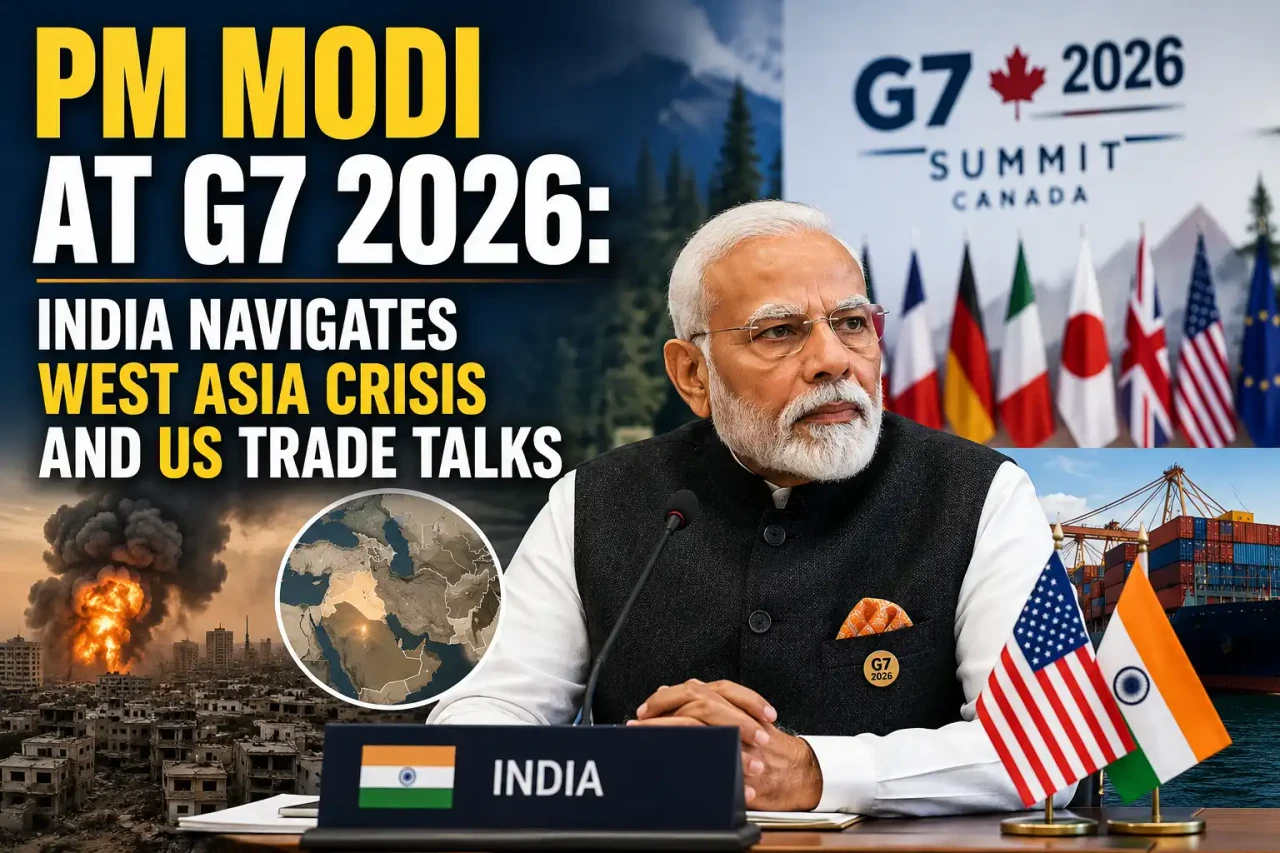
PM Modi at G7 2026: India Navigates West Asia Crisis and US Trade Talks
Prime Minister Narendra Modi's participation in the 2026 G7 Summit in France comes at a pivotal moment for India and the world. With the West Asia crisis dominating headlines, energy security under threat, and an India-US trade deal in its final stages, Modi's meetings — including a likely sit-down with President Donald Trump — carry significant weight. This blog examines India's diplomatic balancing act and what is at stake for the world's fastest-growing major economy.
India at the G7 Table:
India is attending the G7 Summit as a partner nation — its 13th participation in the outreach process. At the summit, PM Modi addressed world leaders including Trump, welcoming progress in West Asia peace efforts while highlighting the humanitarian and economic consequences of the recent conflict. He emphasised the need for dialogue, diplomacy, and safe maritime routes — a message with direct relevance to Indian interests given the country's dependence on energy imports through the Strait of Hormuz.
The Human Cost for India:
Modi's remarks came against the backdrop of a tragic maritime incident in the Gulf of Oman, where three Indian nationals lost their lives after a Palau-flagged oil tanker carrying a multinational crew was struck by US forces over an alleged blockade violation while reportedly transporting Iranian oil. India has a vast diaspora of seafarers who form the backbone of global shipping — any disruption to maritime trade routes directly threatens their livelihoods and safety.
Energy Partnership with the US:
Both India and the US are keen on building a long-term energy partnership. Discussions at the summit are expected to focus on strengthening cooperation in the energy sector amid concerns over supply chain disruptions caused by West Asia tensions. For India, diversifying energy sources and securing stable pricing is critical — the country imports over 85% of its crude oil, making it highly vulnerable to Middle East volatility.
India-US Trade Deal Nears Completion:
Sources indicate the proposed bilateral trade agreement is in its final stages, with negotiations progressing steadily and work expected to be completed in the coming weeks. A comprehensive trade deal with the US would be a major win for Modi's economic agenda, potentially opening new markets for Indian goods and services while attracting American investment in manufacturing and technology sectors.
India's Balancing Act:
India maintains relationships with Iran, the US, Israel, and Arab nations simultaneously — a diplomatic tightrope that has become even more precarious during the current crisis. Modi's approach at the G7 reflects India's traditional stance: advocating for peaceful resolution while protecting national economic interests. As the US-Iran MoU creates a window for de-escalation, India is well-positioned to benefit from stabilised energy markets and renewed trade flows.
Conclusion:
PM Modi's G7 engagement underscores India's growing role as a voice of moderation in a fractured world. By pushing for diplomacy in West Asia, pursuing energy security, and closing in on a landmark trade deal with the US, India is positioning itself as an indispensable partner in the global order of 2026.