
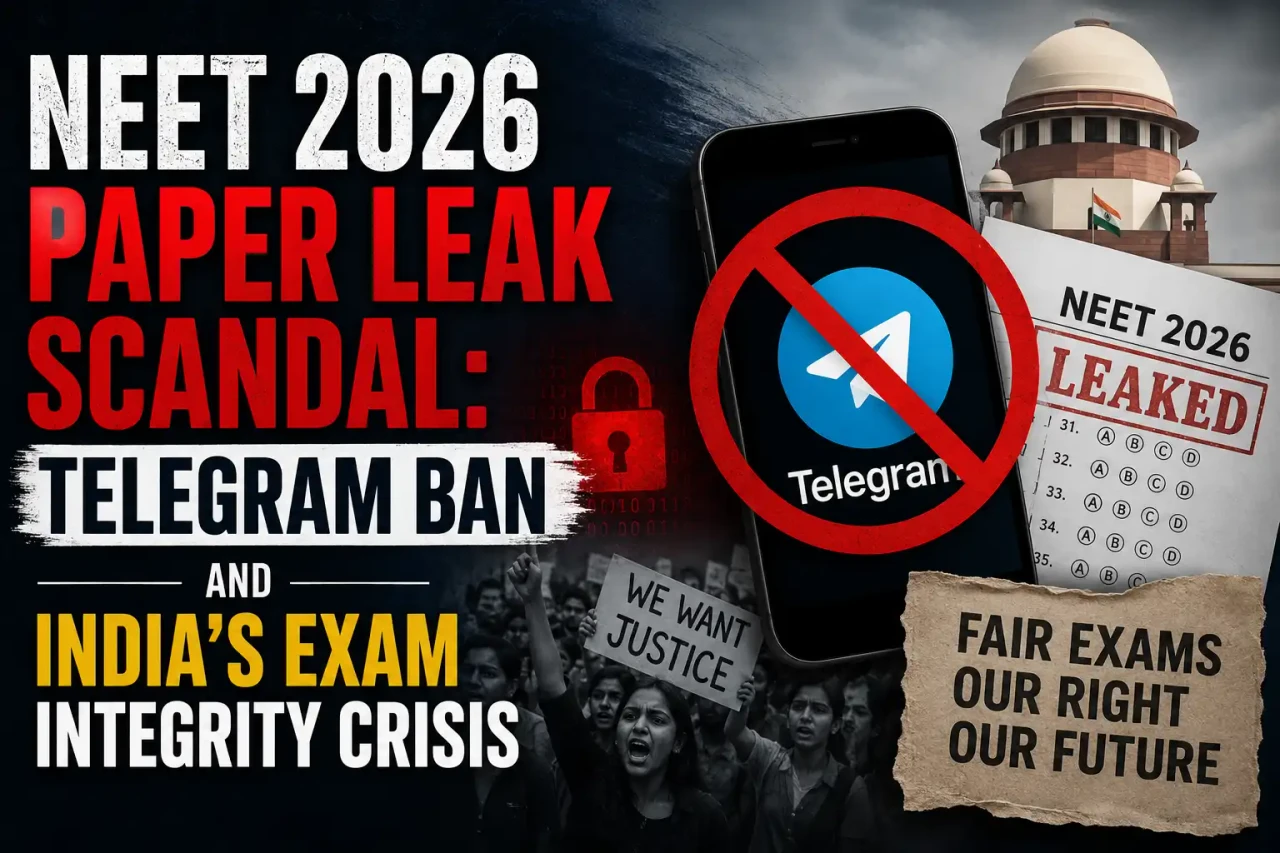
NEET 2026 Paper Leak Scandal: Telegram Ban and India's Exam Integrity Crisis
India's medical entrance exam system is facing one of its biggest integrity crises in years. After the May 2026 NEET-UG exam was cancelled over allegations of a paper leak affecting nearly 2.28 million candidates, the government has taken drastic measures — including a temporary nationwide ban on Telegram — ahead of the re-examination on June 21. This blog explores the scandal, the government's response, and the broader debate about exam security in India.
The Paper Leak Scandal:
The National Eligibility cum Entrance Test (NEET-UG) was held on May 3, 2026, with approximately 2.28 million candidates appearing at over 5,000 centres across India. Within days, allegations of a paper leak surfaced, triggering widespread student protests and forcing the National Testing Agency (NTA) to cancel the entire examination. For millions of aspiring medical students who spent years preparing, the cancellation was devastating — resetting the clock on one of the most competitive exams in the country.
Telegram Ban and Digital Crackdown:
In the run-up to the re-examination scheduled for June 21, India's Ministry of Electronics and Information Technology directed Telegram to restrict access to the app nationwide until June 22. The ministry also asked Telegram to disable its message-editing feature until June 30, citing its use to "fabricate" evidence of paper leaks. The Indian Cyber Crime Coordination Centre (I4C) simultaneously took down numerous Telegram channels, groups, and bots that openly advertised fraudulent exam-related services.
Free Speech vs Exam Security:
The ban sparked immediate backlash from digital rights advocates. The Internet Freedom Foundation (IFF) called the block "reactive and ineffective," arguing it punishes ordinary users — including thousands of students who rely on Telegram for study groups, doubt-clearing sessions, and shared resources — rather than addressing the systemic source of exam leaks. The NTA acknowledged the inconvenience but defended the measure as necessary to protect exam integrity in the critical final days before the retest.
A Pattern of NEET Controversies:
NEET has faced repeated integrity challenges in recent years, from question paper leaks to allegations of irregularities in scoring and centre management. Each scandal erodes public trust in the NTA and places enormous psychological pressure on students. The 2026 crisis has reignited calls for structural reforms — including stronger physical security at exam centres, blockchain-based question delivery, and independent oversight of the testing process.
What's Next for Students:
With the re-exam set for June 21 and Telegram access expected to resume on June 22, students are in a final sprint of preparation under extraordinary circumstances. The outcome of this retest will determine the medical careers of over two million young Indians — making the stakes for getting exam security right higher than ever.
Conclusion:
The NEET 2026 scandal is a wake-up call for India's education system. Banning apps may provide short-term relief, but lasting solutions require systemic reform — better technology, stronger accountability, and a commitment to ensuring that no student's future is stolen by corruption.